
Artificial intelligence is moving from answer generation toward task completion. For credit unions, one of the most practical AI-agent opportunities is not a general-purpose chatbot. It is a controlled back-office agent that helps staff move member loan-servicing work forward without making final decisions on its own.
That distinction matters. An AI agent can do more than summarize a question. It can check whether a hardship request is missing a document, draft a servicing note, prepare a follow-up message, flag a disclosure requirement, or assemble context for a loan employee. In auto lending, mortgages, HELOCs, and skip-a-pay programs, those small steps can reduce friction for members and staff.
The compliance risk appears when the agent becomes too autonomous. A credit union should not let an AI agent approve a deferral, change a payment arrangement, quote a final payoff, deny a request, or post a member-facing explanation without human review. Loan servicing touches fair lending, UDAAP, privacy, record retention, complaint handling, and member trust. The safer model is agent-assisted servicing, not agent-run servicing.
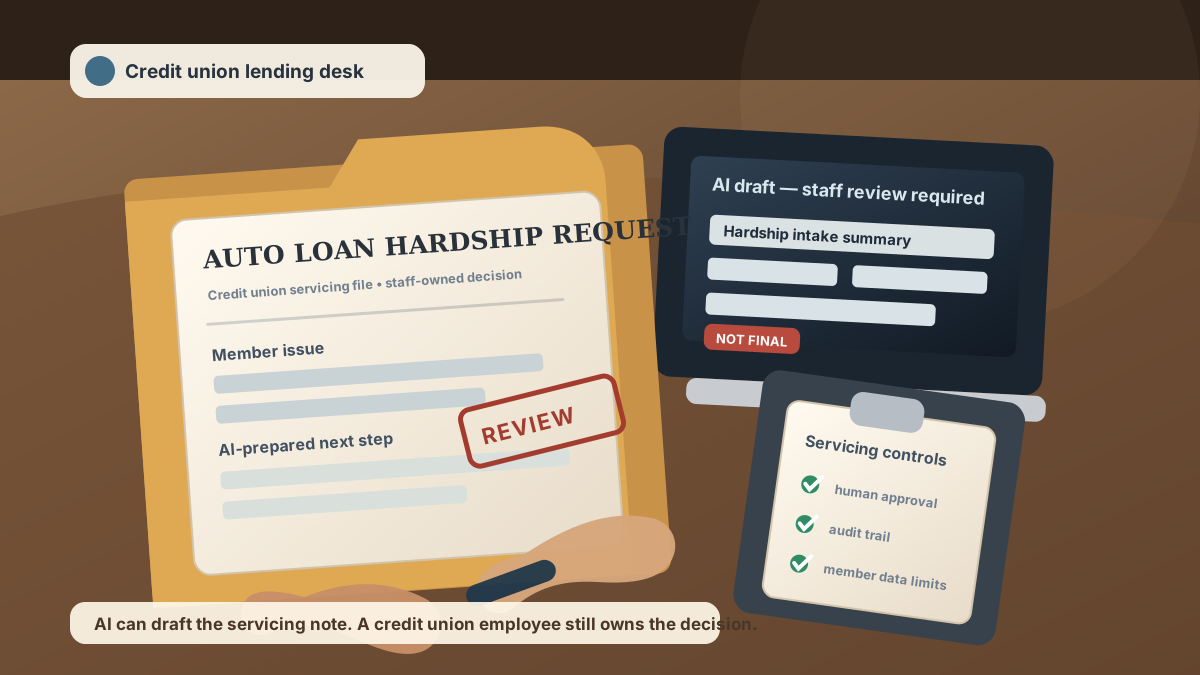
A narrow first use case could be auto loan hardship intake. The agent reviews the member's request, identifies missing information, drafts a staff note, suggests the next internal task, and highlights whether a supervisor should review the case. A credit union employee then accepts, edits, or rejects the draft before anything enters the system of record or goes to the member.
That workflow creates measurable value without pretending AI is ready to replace judgment. Leaders can track wrap time, missing-document rates, member follow-up speed, staff edits to AI drafts, complaint trends, and audit exceptions. If the tool saves time but increases corrections or unsupported statements, the pilot should pause. If it improves consistency while employees remain accountable, the use case can expand.
Vendor controls should be part of the pilot from day one. Credit unions should ask whether member data is used for model training, how prompts and outputs are retained, whether the agent can access core or loan-servicing systems directly, what logs are available for audit, and how the vendor prevents unsupported recommendations. A loan-servicing agent with no audit trail is a governance problem, even if it feels efficient.
The member-facing benefit is also important. Faster hardship follow-up, clearer document requests, and fewer repeated explanations can improve a stressful member experience. But the credit union value proposition depends on empathy and accountability. Members should not feel that a black-box system decided how they are treated during a financial hardship.
The practical takeaway: credit unions should treat AI agents as workflow accelerators with defined permissions. Start where the agent can gather, draft, classify, and route. Keep humans responsible for approvals, adverse decisions, sensitive explanations, and final member communications. That is how the AI-agent trend becomes a credit-union-ready operating model.