
AI vendor conversations are accelerating. Core providers, digital banking platforms, fraud vendors, marketing systems, loan tools, and productivity suites are all adding AI features. The risk for credit unions is not only choosing the wrong tool. It is buying new AI before understanding what is already in the environment. Many institutions will discover that AI is already present through software updates, embedded analytics, support tools, or employee workarounds.
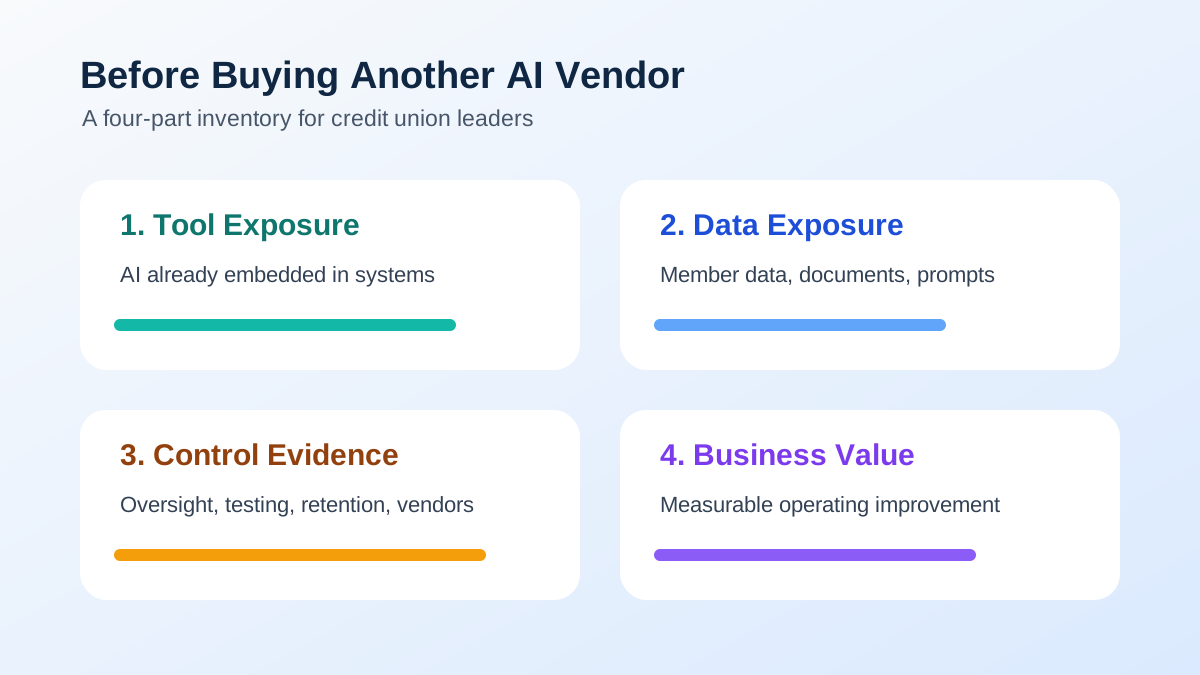
The first inventory is tool exposure. Which systems already include AI or machine-learning features? Which employees are using public AI tools? Which vendors process prompts, transcripts, documents, or member data through AI-enabled workflows? This inventory should include both formally approved systems and informal usage. A policy that ignores shadow AI will not match reality.
The second inventory is data exposure. Credit unions should classify whether a use case touches public information, internal-only documents, confidential business data, member nonpublic personal information, lending data, complaints, or fraud records. The data category determines the control standard. A tool used to draft a generic training outline is not the same as a tool summarizing dispute notes or analyzing loan files.
The third inventory is control evidence. For every AI-enabled vendor, ask for documentation on model purpose, data retention, human oversight, testing, security, subcontractors, change management, and incident handling. If the vendor cannot explain how AI is governed, the credit union should not treat the feature as low risk. The question is not only whether the vendor uses AI; it is whether the credit union can document how the AI is controlled.
The fourth inventory is business value. Each AI use case should map to a measurable outcome: reduced handle time, faster document review, fewer errors, better fraud triage, improved staff training, or clearer member communication. Without that link, AI becomes a feature purchase instead of an operating improvement.
A four-part inventory also improves vendor negotiations. If the credit union knows its current exposure, data categories, required controls, and desired outcomes, it can ask sharper questions and avoid paying for overlapping features. The result is a cleaner roadmap: fewer random demos, better due diligence, and AI investments tied to actual operating priorities.