
Decision card · October 13, 2026 · Collections
Before AI Recommends Hardship Treatment, Connect Four Parts of the Decision
Use a compact decision record to distinguish member facts, policy, human judgment and follow-up. This is a visual adaptation of CUAI’s published reporting, not another article.
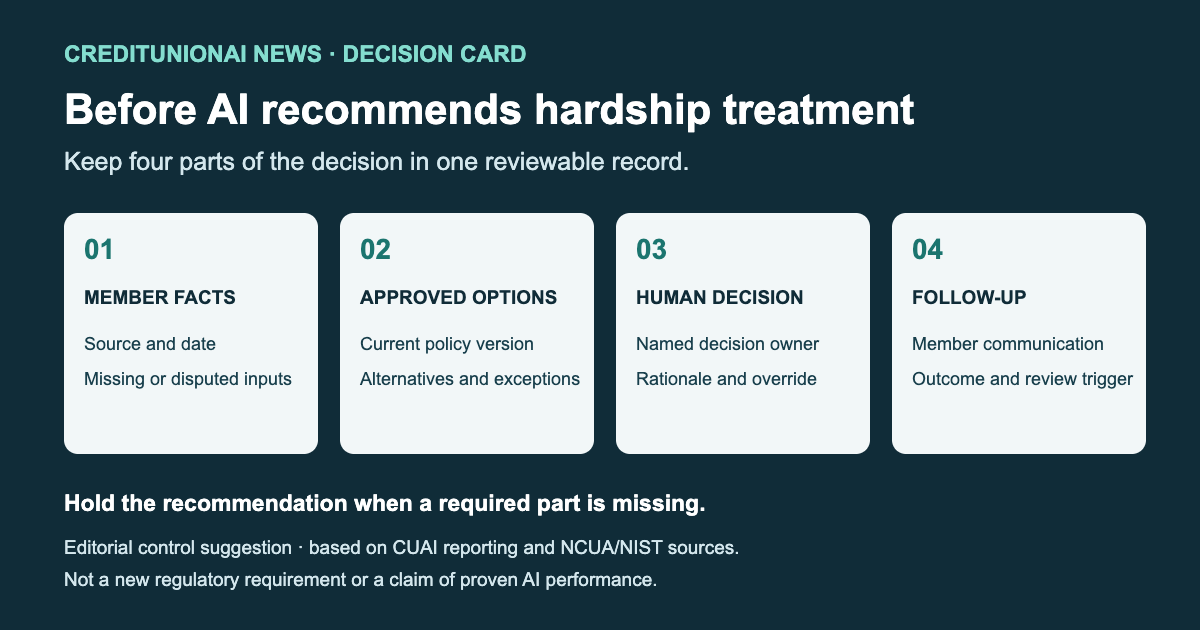
Text alternative and decision
- Member facts: preserve the source and date; flag missing or disputed inputs.
- Approved options: connect the current policy version to alternatives and exceptions.
- Human decision: name the decision owner and record rationale and any override.
- Follow-up: connect member communication, outcome and the next review trigger.
Decision: hold the recommendation when a required part is missing; route it to the designated collections owner.
Evidence: the current NCUA loan-workout policy baseline and NIST’s voluntary AI-governance guidance support documented controls and accountable roles. The four-part layout is CUAI’s editorial synthesis.
Check: collections and compliance owners review policy currency, missing inputs, exceptions and member follow-up before use.
Limits: this card does not establish legal applicability, mandate a particular AI design, validate a model, or promise better outcomes. No real member record is depicted.
Sources and return path
- CUAI: A Hardship-Treatment Record for AI-Assisted Credit Union Collections — October 7, 2026
- NCUA loan-workout policy baseline: Appendix B to Part 741
- NIST AI RMF Govern Playbook — voluntary guidance; framework revision underway