
Credit unions may have more AI in production than their formal inventories suggest. The source is often not a new standalone AI purchase, but an update inside a familiar vendor platform: a fraud tool with machine-learning scoring, a lending system with automated recommendations, a contact-center suite with call summaries, or a marketing platform with predictive segmentation.
That quiet arrival creates a gap between how AI is actually being used and how it is governed. Board reporting, vendor files, risk registers, and audit evidence can lag behind product releases. By the time a renewal or annual review comes around, the feature may already be influencing workflows that involve member data or member-facing decisions.
The risk is not that every embedded AI feature is inappropriate. Some may improve fraud detection, speed up service, or help staff identify exceptions earlier. The problem is visibility. If a credit union cannot say where the feature operates, what data it uses, who owns the control, and how exceptions are reviewed, it has a governance blind spot.
Vendor-management teams are likely to feel this pressure first. Renewal packets that once focused on uptime, data security, and service levels now need to account for product features that learn from data or generate recommendations. Contract language that was sufficient three years ago may not clearly address AI disclosure, model changes, member-data use, or audit evidence.
Risk and compliance leaders also need a clearer view of operational impact. A fraud score, call summary, underwriting suggestion, or member-segmentation model can affect how staff prioritize work even when a human remains in the loop. That makes evidence important: not just whether a vendor says AI is present, but where it appears in the workflow and what review point exists before members are affected.
For boards, the useful question is not whether the credit union is “using AI.” The better question is whether management can identify embedded AI across major vendor platforms and explain the control environment around it. That includes ownership, data use, change notices, override practices, member-impact review, and evidence that staff know when to escalate exceptions.
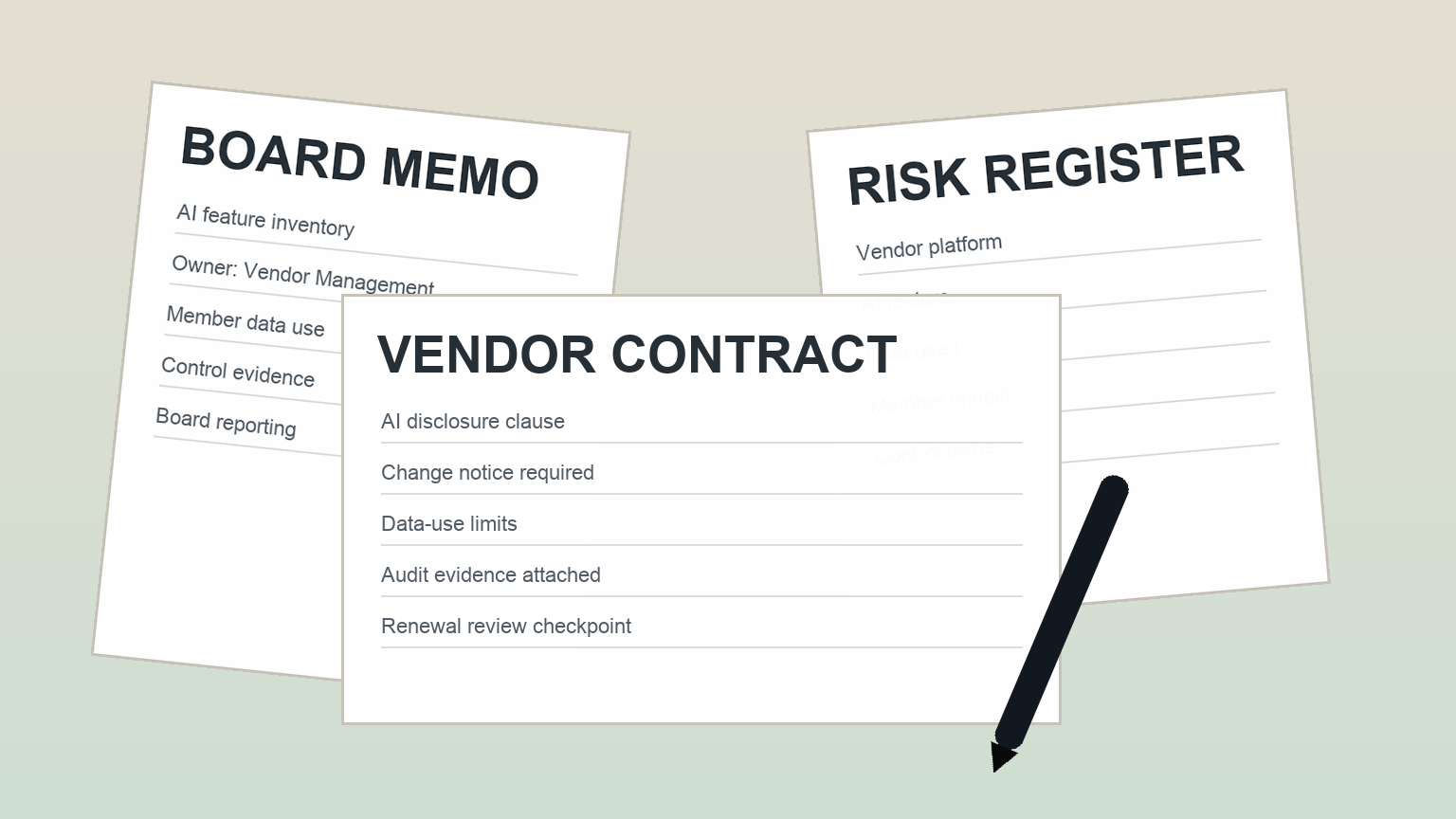
This is where ordinary governance artifacts matter. Board memos, vendor contracts, risk registers, control reviews, audit evidence, call transcripts, loan files, and case notes can reveal whether AI-enabled features are documented or merely assumed to be covered by existing controls. The same materials can also show where vendor disclosures are vague or where internal ownership is unclear.
The issue will become more visible as vendors continue adding AI to standard releases. Credit unions that treat embedded AI as part of vendor oversight, rather than as a separate innovation project, will be better positioned for examiner questions, board updates, and member-impact reviews. The work starts with visibility: knowing which vendor systems now contain AI, what those features touch, and where the evidence sits.